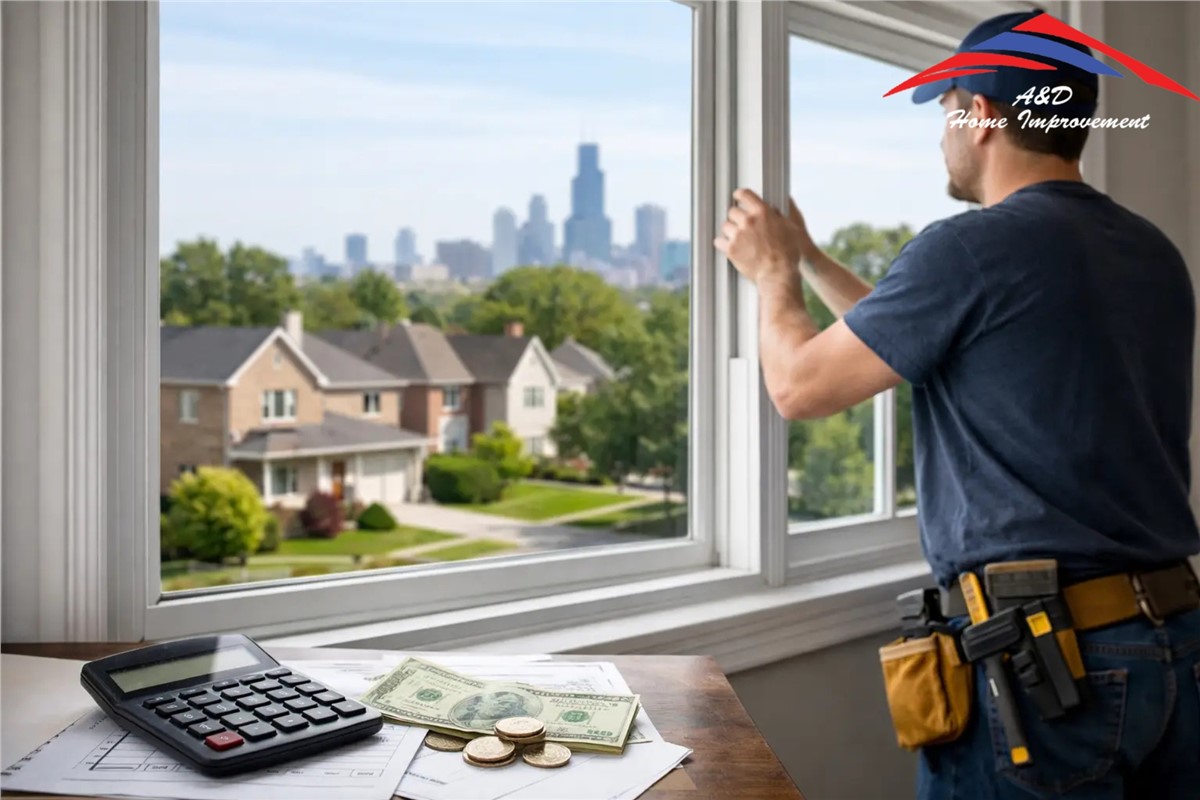
A drafty bedroom in January, fogged glass between panes, or a window that will not stay open usually makes one question urgent: what will this cost? Replacement windows cost varies widely in the Chicago suburbs because the window itself is only part of the investment. Size, glass package, frame material, installation conditions, and the condition of the existing opening all affect the final number.
For most homeowners, the right goal is not finding the cheapest window. It is choosing a properly sized, professionally installed window system that improves comfort, protects the home from Illinois weather, and delivers value over many years.
What Do Replacement Windows Cost?
A typical professionally installed replacement window can range from roughly $700 to $2,500 or more per opening in the Chicago suburban market. A standard-size double-hung vinyl window with a practical energy-efficient glass package generally falls toward the lower to middle portion of that range. Larger picture windows, bay or bow windows, premium fiberglass or wood-clad frames, and custom shapes can cost substantially more.
A whole-home project is calculated by multiplying that per-window range by the number and type of openings, then accounting for installation complexity. For example, replacing 10 standard windows may be a very different investment than replacing 10 windows that include oversized openings, damaged exterior trim, or difficult second-story access.
An accurate estimate should account for the complete project, not simply quote a low price for a basic window unit. That means measuring each opening, reviewing exterior conditions, discussing performance goals, and explaining what is included in the installation.
What Has the Biggest Effect on Window Pricing?
Window style and size
A standard double-hung window is often more economical than specialty styles because it is produced in common sizes and installs within a conventional opening. Casement, awning, sliding, and picture windows may be priced differently based on hardware, glass area, and dimensions.
Bay and bow windows are typically among the higher-cost options. They project from the home, require structural support and exterior finishing, and may involve roofing or flashing work. Large custom windows and architectural shapes also increase material and labor costs.
Frame material
Vinyl remains a popular choice for homeowners who want strong thermal performance and low maintenance at a manageable price. Quality varies, however. Frame construction, reinforcement, weatherstripping, color options, and warranty coverage can separate an entry-level product from a premium vinyl window.
Fiberglass is often selected for its strength, stability, and clean appearance. It can be a smart long-term choice for larger openings or homeowners seeking a higher-end finish. Wood-clad windows offer a traditional interior appearance and broad design flexibility, but generally carry a higher upfront investment and may require more attention over time.
The best material depends on the home, the desired look, and the homeowner's priorities. Paying more for a frame material does not automatically make sense if a well-built vinyl or fiberglass option delivers the performance and appearance the project requires.
Glass and energy performance
Chicago-area windows face cold winters, humid summers, wind, and intense seasonal temperature swings. An energy-efficient glass package can improve comfort near the window and help reduce strain on heating and cooling equipment.
Features such as double- or triple-pane insulated glass, low-emissivity coatings, argon gas fills, and warm-edge spacers influence both price and performance. Triple-pane glass can be worthwhile for homes with severe drafts, high exposure, or a strong focus on sound reduction and winter comfort. In other homes, a high-quality double-pane package may offer the better balance of cost and performance.
Ask about the actual performance ratings of the proposed window, not just general claims about energy efficiency. U-factor, air leakage, solar heat gain, and condensation resistance can all help explain how a window is expected to perform.
Installation conditions
Professional installation is where a window project earns its long-term value. Even a premium window can underperform if the opening is not prepared, sealed, insulated, and flashed correctly.
Straightforward replacement installation is usually less expensive than work involving rot, water damage, masonry adjustments, structural repairs, or major trim replacement. Homes with older wood frames may reveal hidden deterioration once existing windows are removed. A responsible contractor should explain how those conditions are handled before work begins, including whether repair allowances or change-order procedures apply.
Second-story openings, limited access, historic details, and lead-safe work practices in older homes can also affect labor costs. These are not unnecessary extras. They are part of completing the project correctly and protecting the home.
Why the Lowest Window Quote Can Cost More Later
Comparing estimates is smart. Comparing only the bottom-line price can create expensive surprises.
A low quote may omit exterior trim work, insulation around the opening, disposal of old windows, permit fees, upgraded glass, or repairs discovered during installation. It may also use a lower-grade product with fewer reinforcement features, weaker weatherstripping, or limited warranty protection. The result can be persistent drafts, water intrusion, difficult operation, or an early replacement cycle.
A detailed proposal creates a fairer comparison. It should identify the window manufacturer and series, frame color, glass package, grids or hardware, installation scope, trim details, warranty terms, and any conditions that could affect final pricing. Homeowners should feel comfortable asking what is included and what is not.
Building a Realistic Replacement Window Budget
Start with the windows causing the most trouble. Failed seals, water leaks, rotted frames, difficult operation, and severe drafts deserve priority over purely cosmetic concerns. If the budget does not support replacing every window at once, a phased plan can address high-impact rooms first while keeping product lines and finishes consistent for later work.
It is also worth considering the project alongside siding, roofing, or exterior trim work. Coordinating exterior improvements can reduce duplicate labor and produce cleaner flashing and finishing details. Timing matters, particularly when windows are being replaced near aging siding or areas with known moisture concerns.
Financing can make a quality installation more accessible without forcing homeowners to select a lower-performing product. The key is to review the full project cost, payment terms, and warranty coverage clearly. A monthly payment is helpful only when the underlying scope is right for the home.
Questions to Ask Before Approving a Window Estimate
Before signing an agreement, ask the contractor how the windows will be measured and installed, what insulation and sealing methods will be used, and how existing damage will be handled. Confirm whether interior and exterior trim are included, whether permits are required, and who will manage cleanup.
Also ask about labor and manufacturer warranties. A strong product warranty matters, but workmanship coverage is equally important because installation quality directly affects air and water performance. Certified installation standards and established manufacturer partnerships provide added confidence that the system is being installed according to its requirements.
A&D Home Improvement helps Chicago suburban homeowners evaluate window options based on real home conditions, energy goals, design preferences, and budget. The focus is on durable products, precise installation, and clear project expectations from the first estimate through final walkthrough.
When Is Replacing Windows Worth It?
Replacement is often justified when windows leak air or water, show condensation between panes, have deteriorating frames, no longer operate safely, or make rooms consistently uncomfortable. New windows can also improve curb appeal, reduce exterior noise, and support a larger exterior renovation.
They are not always the first repair needed. If a window is structurally sound and the issue is limited to worn caulk, damaged screens, or minor hardware, repair may be the practical choice. An honest evaluation should distinguish between a maintenance issue and a window that has reached the end of its service life.
The right window project should leave your home quieter, more comfortable, and better prepared for the next Chicago winter. A detailed, no-pressure estimate is the best place to start because it turns a broad price range into a clear plan for your specific home.
Subscribe to A&D Home Improvement's Blog