A gutter system can look acceptable from the ground while quietly directing water toward the wrong places. In the Chicago suburbs, that risk grows after heavy rain, snowmelt, freeze-thaw cycles, and windstorms. Knowing when should gutters be replaced helps protect more than the roofline - it can prevent foundation moisture, damaged siding, landscape erosion, and costly interior leaks.
Gutters do not last forever, but replacement is not necessary every time water spills over an edge. Some problems come from clogs, loose fasteners, or incorrect slope and can be repaired. The decision comes down to the condition of the material, the extent of the damage, and whether the system can still move water reliably away from the property.
When Should Gutters Be Replaced Instead of Repaired?
A professional repair often makes sense when the issue is isolated: one loose hanger, a small seam leak, or a downspout that has come loose. Replacement becomes the smarter long-term investment when problems appear in several areas, return after repeated repairs, or indicate that the gutters have reached the end of their service life.
For many homes, aluminum gutters last roughly 20 years or longer with proper maintenance. Steel systems may corrode sooner if their protective coating is compromised. Vinyl can become brittle in Illinois winters, while copper can last much longer but carries a higher upfront cost. Age alone is not the final answer. A newer system with poor installation can fail early, and an older, well-installed system may still perform well.
The key question is simple: Can the gutters capture runoff and send it safely away from the building during a hard rain? If the answer is no, the problem deserves prompt attention.
10 Signs Your Gutters May Need Replacement
1. Cracks, holes, or splits keep appearing
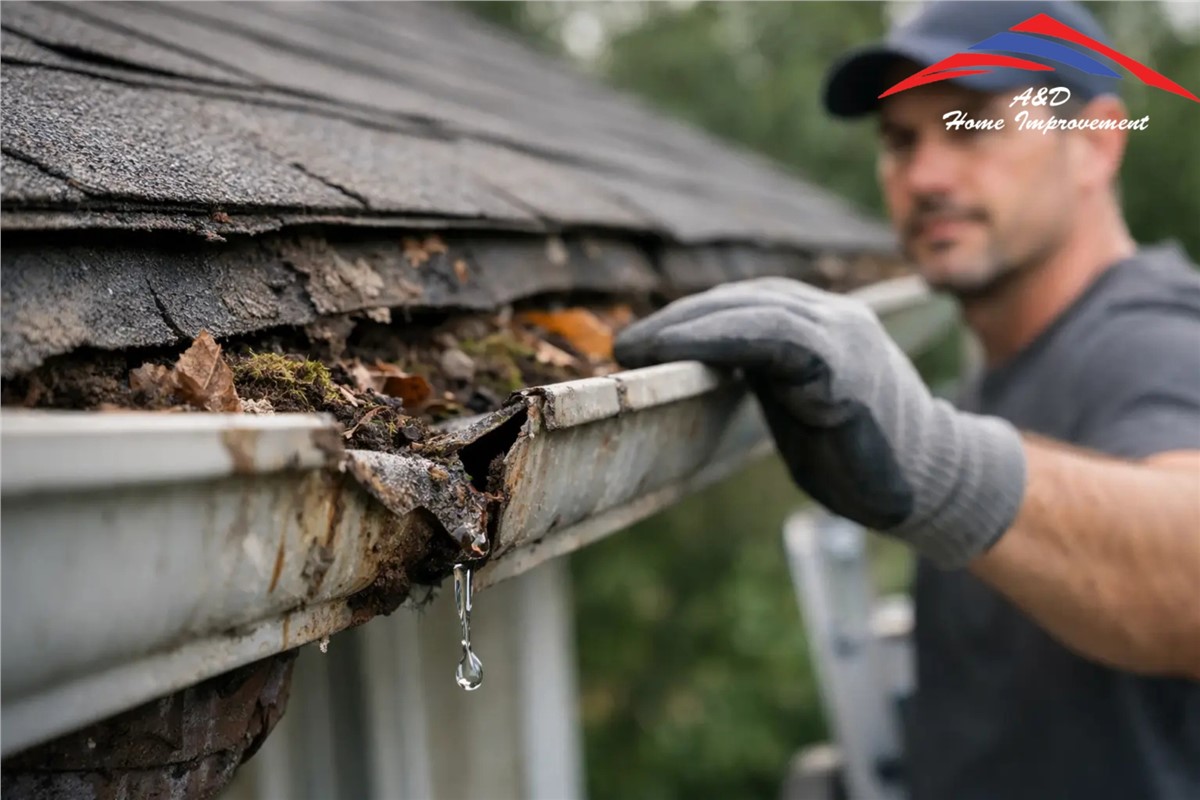
Small cracks can sometimes be sealed, especially when caught early. However, multiple cracks or splits along the trough suggest the material is weakening. Even a small opening allows water to run behind the gutter, stain fascia boards, and soak the siding below.
If patching one area only leads to another failure a season later, replacement is generally more cost-effective than continuing to chase leaks.
2. Seams leak repeatedly
Traditional sectional gutters have joints where individual pieces connect. Those seams can separate as the home shifts, debris builds up, and seasonal temperatures expand and contract the metal. One manageable seam leak may be repairable. Several leaking joints are a strong case for seamless gutter replacement.
Seamless gutters are formed to the dimensions of the roofline, reducing the number of joints where water can escape. They are especially valuable on long roof runs and homes surrounded by mature trees.
3. The gutters sag or pull away from the house
Gutters should sit securely against the fascia and maintain a subtle slope toward each downspout. When they sag, bow, or pull away, water can collect in the low spots and overflow. The added weight of standing water, wet leaves, or ice can make the issue worse.
Replacing a few hangers may solve a localized problem. But if the gutter has become permanently warped or the attachment points are failing across the roofline, new gutters and an inspection of the fascia are the safer solution.
4. Water overflows during ordinary rain
Overflow does not always mean replacement is needed. Leaves, shingle granules, and nests can block a gutter or downspout, so cleaning should be the first step. If a clean system still overflows in a normal rainfall, the gutters may be undersized, improperly pitched, or damaged.
This is common on homes with steep roofs or large roof planes that shed a high volume of water quickly. A properly designed replacement system can use the right gutter profile, downspout size, and placement to manage that runoff.
5. You see rust, peeling paint, or corrosion
Surface discoloration is more than a curb appeal concern. Rust means moisture has begun breaking down the metal. Peeling exterior paint near the gutters can signal persistent water exposure from a leak, overflow, or failing seam.
Once corrosion creates weak spots, repairs may not hold for long. Replacing deteriorated sections before they fail completely can help protect the roof edge and exterior walls.
6. Fasteners, nails, or screws are on the ground
Hardware that repeatedly falls from the gutter line should never be ignored. It can mean the system is loosening, the fascia board is deteriorating, or the original installation did not provide enough support for snow and ice loads.
A contractor should identify the source before installing anything new. New gutters attached to rotted fascia will not deliver a lasting result. Addressing the wood condition and using properly spaced, heavy-duty hangers creates a more dependable installation.
7. The fascia, soffit, or siding shows water damage
Dark stains, soft wood, peeling paint, or visible rot around the roof edge often point to a gutter problem. Water may be flowing behind the trough rather than into it, leaking through seams, or overflowing too often.
This type of damage is a clear reason to act quickly. Replacing the gutter system without correcting affected fascia or flashing can leave the underlying problem unresolved. A full exterior assessment is valuable because roofs, gutters, soffits, and siding all work together to manage moisture.
8. Water pools near the foundation
Downspouts should discharge water far enough from the home that it does not collect along the foundation. Puddles near basement walls, washed-out mulch, or soil trenches below downspouts indicate poor drainage.
The fix may be as straightforward as a downspout extension. But if the gutters are too small, leaking, or routed poorly, replacement may be necessary to protect the foundation and reduce the chance of moisture intrusion in lower levels.
9. Landscaping and hardscapes are washing away
A concentrated stream of runoff can carve channels through flower beds, damage shrubs, and undermine walkways or patios. Homeowners sometimes focus on repairing the landscape first, but the drainage source needs attention or the damage will return with the next storm.
A replacement plan should consider where every downspout empties. Directing water thoughtfully is just as important as selecting durable gutter material.
10. Ice dams and icicles are a recurring winter problem
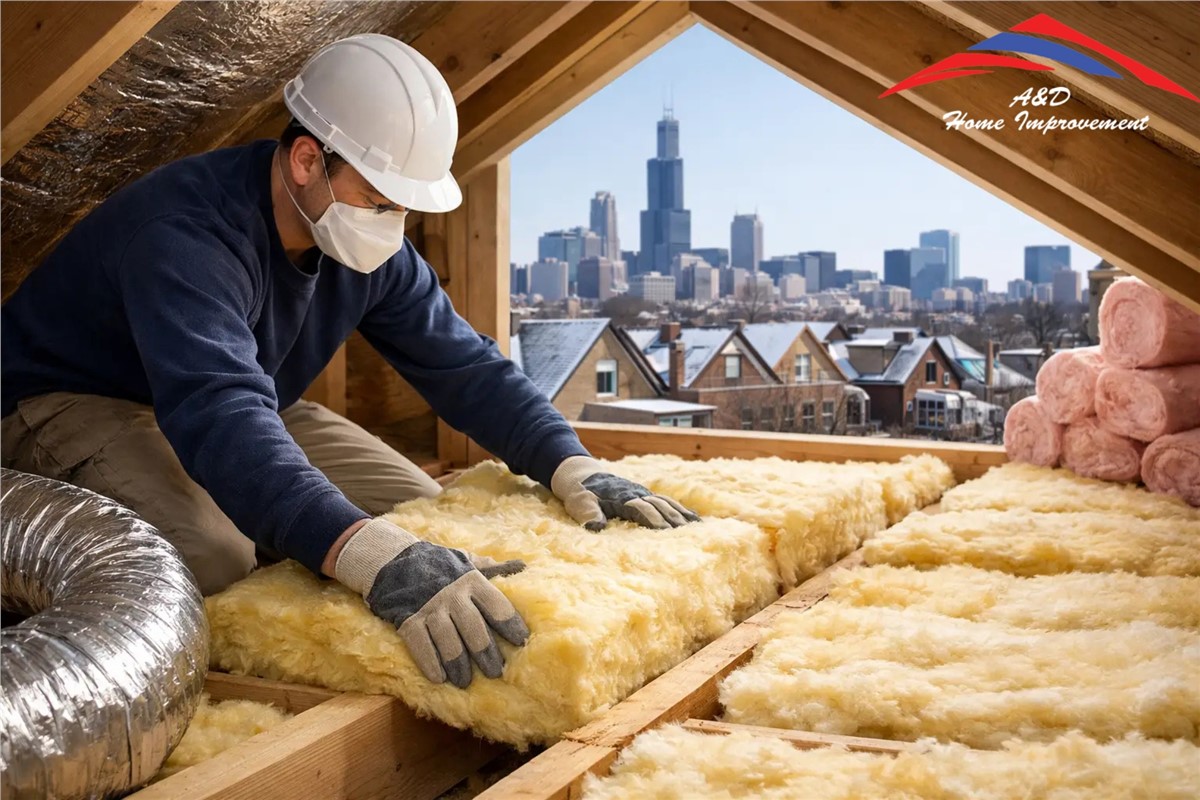
Ice buildup along gutters is common during Chicago-area winters, but severe or recurring ice dams deserve investigation. Clogged gutters can contribute, yet the root cause may also involve attic heat loss, inadequate insulation, or poor roof ventilation. Water melts higher on the roof, refreezes near the cold eaves, and can work its way beneath shingles.
Replacing damaged gutters may be part of the solution, but it should not be treated as the only fix. A qualified exterior contractor can evaluate the roof edge, attic conditions, and drainage system together.
What to Consider Before Choosing New Gutters
Replacement provides an opportunity to correct the issues that caused the old system to fail. Material matters, but installation details matter just as much. For most suburban homes, seamless aluminum gutters offer a practical balance of durability, appearance, and value. They resist rust, can be color-matched to the exterior, and have fewer leak-prone joints than sectional systems.
Gutter size should match the roof's runoff demands. Standard 5-inch gutters work well for many properties, while 6-inch gutters may be a better choice for large roof areas, steep pitches, or locations that experience heavy runoff. Downspout capacity and placement should be part of the design, not an afterthought.
Gutter guards can also reduce maintenance, particularly near mature trees. They are not a substitute for proper sizing or slope, and no guard eliminates all maintenance. Still, a quality guard system can reduce the buildup of leaves and debris that causes clogs, overflow, and winter drainage issues.
Why Professional Installation Makes a Difference
Gutters are only effective when they are pitched correctly, securely fastened, and integrated with the roof edge. A system that is too flat holds water. A system that slopes too aggressively can look uneven and may not collect water effectively along the full run. Poorly placed downspouts can create drainage problems even when the gutters themselves are new.
A&D Home Improvement approaches gutter replacement as part of the property's complete exterior protection system. That means checking for storm-related damage, compromised fascia, roof-edge concerns, and drainage patterns before installation. Professional-grade materials, precise measurements, and workmanship protection give homeowners more confidence that their investment will perform through changing Illinois weather.
If you notice water where it does not belong, do not wait for visible rot or a wet basement to force the decision. A timely gutter inspection can clarify whether a targeted repair is enough or whether replacement is the better way to protect your home for the seasons ahead.
Subscribe to A&D Home Improvement's Blog