A roof leak over a warehouse aisle, office suite, or retail entrance is more than an inconvenience - it can interrupt operations, damage inventory, and create expensive repair cycles. That is why understanding commercial roofing system types matters before you approve a replacement, plan a new build, or compare bids. The right system should match your building, your budget, and the weather demands that come with owning property in the Chicago suburbs.
Commercial roofing is not one-size-fits-all. Flat and low-slope roofs dominate commercial properties, but the best material depends on drainage, rooftop traffic, insulation goals, exposure to wind and hail, and how long you plan to hold the property. A lower upfront cost may look attractive on paper, but if the system cannot handle ponding water, temperature swings, or frequent service traffic, the real cost shows up later.
Commercial roofing system types and where they fit
Most commercial buildings in Illinois use one of a few proven roofing categories. Each has a place, and each comes with trade-offs.
TPO roofing
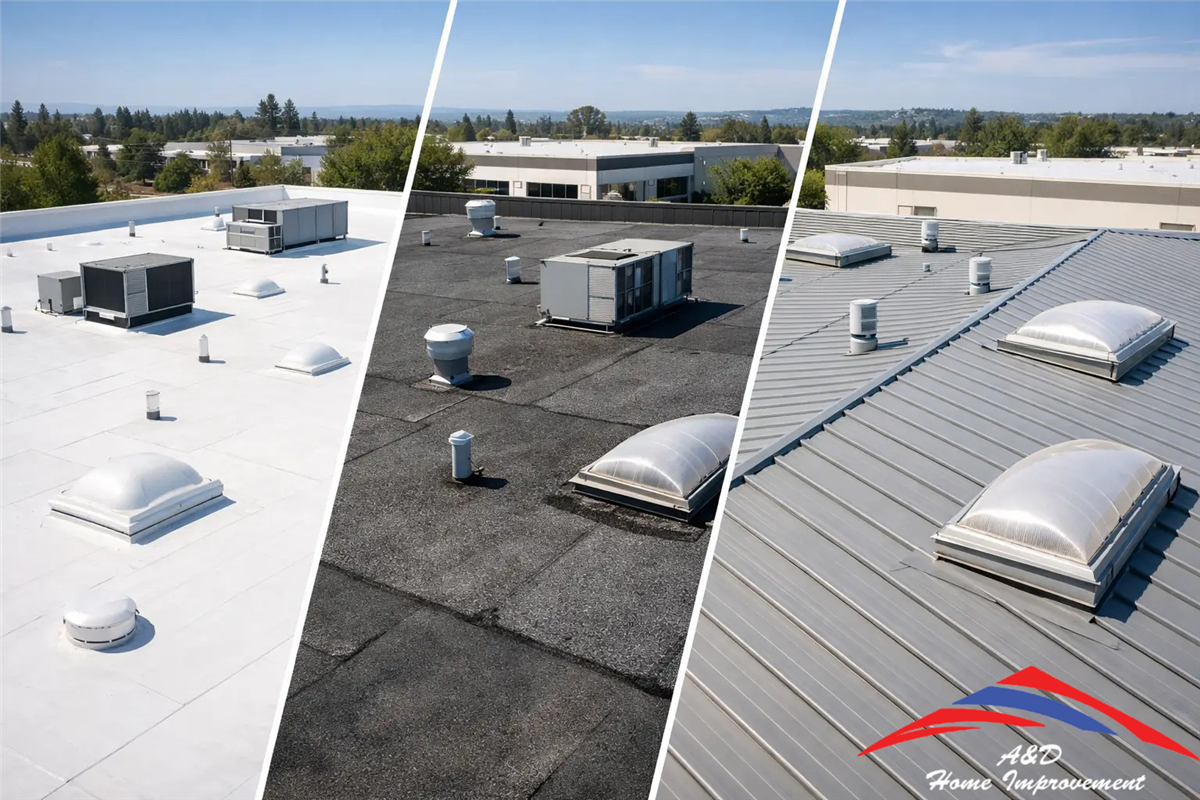
TPO, or thermoplastic polyolefin, is one of the most popular options for low-slope commercial roofs. It is a single-ply membrane known for heat-welded seams, reflective surfaces, and solid energy performance. For owners trying to improve efficiency and keep interiors more stable during hot summers, TPO often stands out.
Its appeal is practical. TPO can provide a clean appearance, good UV resistance, and a balance of performance and cost. When installed correctly, the welded seams create strong connections that help resist leaks. That said, product quality can vary by manufacturer, and installation quality matters just as much as the membrane itself. A poorly detailed TPO roof around penetrations or edges can underperform no matter how good the material is.
EPDM roofing
EPDM is a synthetic rubber membrane that has been used on commercial buildings for decades. It is especially well known for durability and flexibility in changing temperatures, which makes it a relevant option in climates like ours. Black EPDM absorbs heat, which can be a plus or minus depending on the building and insulation design.
Many property owners choose EPDM because it has a long track record. It can perform very well on large roof areas and is often a dependable choice when the priority is value and durability rather than reflectivity. The trade-off is that seam performance and puncture resistance need close attention, especially on buildings with regular rooftop foot traffic from HVAC service teams.
PVC roofing
PVC is another single-ply membrane, and it is often selected for buildings that need strong chemical resistance or grease resistance, such as restaurants or certain industrial properties. Like TPO, it uses heat-welded seams, which can create reliable waterproofing when handled by a trained crew.
PVC typically costs more than TPO or EPDM, but in the right setting, that higher investment can make sense. If your building has rooftop exhausts or usage conditions that are tough on standard membranes, PVC may deliver better long-term value. It is not automatically the best fit for every property, but it is a serious option when performance requirements are higher.
Modified bitumen roofing
Modified bitumen is an asphalt-based system designed for low-slope applications. It is usually installed in layers and can be applied using different methods, including torch-applied, self-adhered, or cold-process systems. That flexibility makes it appealing for certain retrofit projects.
This system is known for toughness and redundancy. Because it is built in layers, it can offer solid puncture resistance and dependable waterproofing. For buildings with occasional maintenance traffic, that can be a real advantage. The trade-off is that installation can be more labor-intensive, and some application methods may not be ideal in every occupied-building situation.
Built-up roofing
Built-up roofing, often called BUR, is one of the older commercial roof systems still in use. It combines multiple layers of bitumen and reinforcing fabrics to create a finished membrane. You will often hear it described as a tar-and-gravel style roof, though configurations vary.
BUR has a reputation for durability and multi-layer protection. On some buildings, owners appreciate that added thickness and redundancy. On the other hand, BUR systems can be heavier than single-ply options, and the installation process may be more disruptive. If structural load, odor sensitivity, or project speed is a concern, another system may make more sense.
Metal roofing for commercial properties
Not every commercial roof is flat. On buildings with steeper roof sections, standing seam metal roofing is often a strong contender. Metal performs well in shedding water and snow, and it can offer excellent longevity when properly engineered and installed.
For certain commercial properties, metal creates a clean, professional appearance while delivering long-term weather resistance. The upfront cost is usually higher, and detailing is critical around penetrations and transitions. Still, for owners thinking long term, metal can be an excellent investment.
How to compare commercial roofing system types
The best roofing decision usually comes down to building use, risk tolerance, and life-cycle cost. If you own a retail center and want a reflective membrane with strong seam performance, TPO or PVC may rise to the top. If you manage an older building and want a proven membrane with good flexibility in cold weather, EPDM may deserve a closer look.
If rooftop traffic is frequent, impact resistance and puncture resistance should carry more weight in the decision. If the building houses a restaurant or facility with chemical exhaust, that changes the conversation too. Roof selection should never happen in a vacuum. Drainage conditions, insulation design, flashing details, and edge metal all affect how the finished system performs.
Budget matters but comparing roofing systems by price alone usually leads to the wrong conclusion. A lower bid can mean thinner materials, weaker details, less experienced installation, or a shorter warranty. A commercial roof should be priced in relation to what you are actually receiving: membrane quality, insulation thickness, attachment method, workmanship standards, and warranty coverage.
What works best in Illinois weather
In the Chicago suburban market, weather resistance is not optional. Commercial roofs need to handle freeze-thaw cycles, high winds, heavy rain, snow loads, summer UV exposure, and occasional hail. That makes proper drainage, secure attachment, and durable flashing details just as important as the membrane choice itself.
For many buildings in this region, single-ply systems such as TPO, PVC, and EPDM are practical solutions when installed by an experienced commercial roofing team. Modified bitumen can also be a strong performer, especially where added toughness is useful. Metal makes sense on the right roof geometry, particularly when long life and snow shedding are priorities.
What fails most often is not always the field membrane. Leaks usually show up at seams, penetrations, edges, drains, and transitions between roof areas. That is why certified installation standards, manufacturer-backed systems, and careful project planning matter so much. A reliable contractor should evaluate the full roof assembly, not just recommend a material and move on.
Repair, restoration, or replacement?
Not every aging roof needs immediate full replacement. If the insulation is dry, the substrate is sound, and the damage is limited, repair or restoration may be worth considering. That said, repeated patching on a failing system often turns into wasted money.
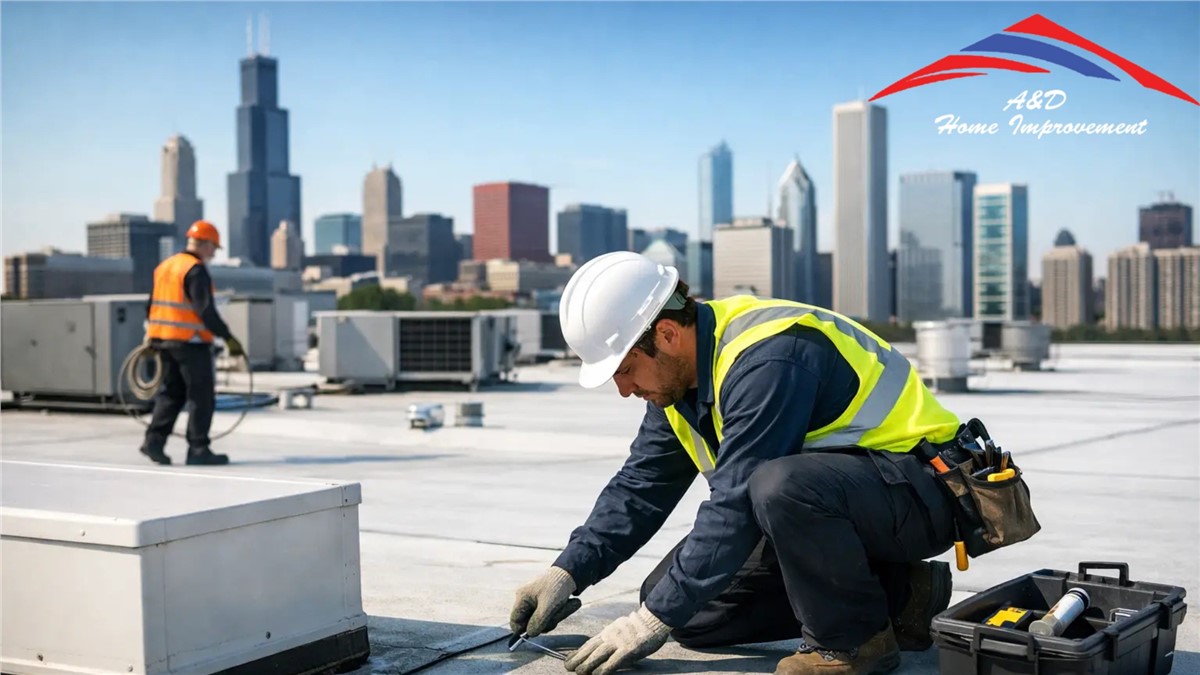
A professional inspection should look at moisture intrusion, membrane condition, seam integrity, flashing performance, drainage issues, and the age of the existing system. From there, you can weigh whether repair extends useful life in a meaningful way or just delays an unavoidable replacement. For commercial owners, clarity here matters because downtime, tenant disruption, and capital planning are all part of the decision.
Choosing the right contractor matters as much as the system
Even the best commercial roofing system types can fail early if the installation is rushed or poorly detailed. Experience, certifications, warranty options, and familiarity with local weather conditions are major factors in long-term performance. A dependable contractor should explain the pros and cons of each system clearly, provide a detailed scope, and recommend options based on your building rather than a one-size-fits-all sales pitch.
For property owners in the Chicago suburbs, working with a company that understands storm exposure, insulation needs, and code requirements can reduce risk from the start. A&D Home Improvement approaches commercial roofing with that local, performance-first mindset, focusing on durable systems, certified workmanship, and long-term value.
If you are comparing roof options for a commercial building, the best next step is a real assessment of your structure, your goals, and your exposure to weather and wear. The right roof is the one that protects your property reliably year after year, not just the one that looks best on an estimate.
Subscribe to A&D Home Improvement's Blog