A gutter system can look fine from the street and still send water toward the foundation during the next hard Illinois downpour. The best gutter systems for drainage do more than catch roof runoff. They move high volumes of water away from the roofline, siding, walkways, landscaping, and basement walls before moisture becomes an expensive repair.
For homes and commercial properties in the Chicago suburbs, drainage performance depends on much more than the gutter material. Roof area, pitch, valley locations, downspout capacity, winter ice, nearby trees, and the grading around the property all matter. A properly designed system protects the exterior investment you already have while reducing the risk of leaks, erosion, ice buildup, and foundation moisture.
What Makes a Gutter System Effective for Drainage?
Reliable drainage begins with the ability to collect water without overflowing, then direct it safely away from the building. That sounds simple, but the wrong gutter size or poorly placed downspouts can overwhelm an otherwise high-quality installation.
A well-performing system needs adequately sized gutters, secure hangers, correctly pitched runs, and downspouts placed where water naturally concentrates. Roof valleys deserve particular attention. During a fast-moving storm, valleys can send a concentrated sheet of water into one small section of gutter. If that area is undersized or clogged, water can spill over the edge, soak the fascia, and pool along the foundation.
The discharge point matters just as much. Downspouts should carry water away from the home through extensions, underground drainage where appropriate, or a planned outlet that does not create slippery walkways or wash out planting beds. A gutter is only one part of a complete water-management system.
Best Gutter Systems for Drainage: The Top Options
Seamless Aluminum Gutters
For most Chicago-area homes, seamless aluminum gutters are the strongest all-around choice. Aluminum does not rust, handles seasonal temperature changes well, and is available in a wide range of colors to complement siding, trim, and roofing. Because seamless gutters are formed on-site to fit each roofline, they have fewer joints than sectional systems. Fewer joints mean fewer common leak points.
Seamless aluminum also offers excellent value. It provides dependable drainage performance without the premium cost of copper, and it can be formed in larger profiles for homes with steep roofs, multiple valleys, or broad roof planes. Quality installation remains essential. Even premium aluminum can sag, pull loose, or drain poorly if the hangers, slope, and outlet locations are not properly planned.
Oversized 6-Inch Gutters
Standard 5-inch gutters can work well on smaller, straightforward rooflines. However, 6-inch gutters are often the better choice for drainage on larger homes, steep roofs, properties with multiple valleys, and buildings that regularly see heavy runoff. The larger channel holds more water and is typically paired with larger downspouts to move it out faster.
This upgrade is particularly worthwhile when a homeowner has dealt with recurring overflow during thunderstorms. It is not always necessary to replace every system with a larger size, but it is often the practical answer for problem areas. A professional assessment can determine whether the issue is gutter capacity, a lack of downspouts, poor pitch, or a clogging problem.
K-Style Gutters
K-style gutters are the most common profile on residential properties, and for good reason. Their flat back allows secure mounting to the fascia, while the decorative front edge suits many traditional and modern home styles. More importantly, K-style gutters carry more water than similarly sized half-round systems.
For homeowners focused on effective drainage and curb appeal, 5-inch or 6-inch seamless K-style aluminum gutters are usually the first system worth considering. The exact size should be selected based on the roof’s runoff demands, not appearance alone.
Half-Round Gutters
Half-round gutters are a classic choice often used on historic homes, upscale properties, and buildings with rounded architectural details. They can deliver dependable performance when sized correctly, particularly in larger dimensions. Their smooth interior can also make debris easier to move through during normal rainfall.
The trade-off is capacity. A standard half-round gutter generally carries less water than a comparable K-style profile. They may also cost more, especially in copper or specialty finishes. For a home with large roof planes or intense valley runoff, a larger half-round size and carefully planned downspouts are necessary to prevent overflow.
Copper Gutters
Copper gutters are a premium, long-lasting option known for their distinctive appearance and natural patina. When professionally installed, they can provide decades of service and elevate the look of luxury homes and historic properties.
Drainage performance, however, still comes down to design. Copper is not automatically a better drainage solution than seamless aluminum. It is an excellent material for the right architectural project, but property owners should budget for the higher material and installation costs. For many homes, oversized seamless aluminum delivers comparable water-handling performance at a more accessible price point.
Why Downspouts Matter as Much as Gutters
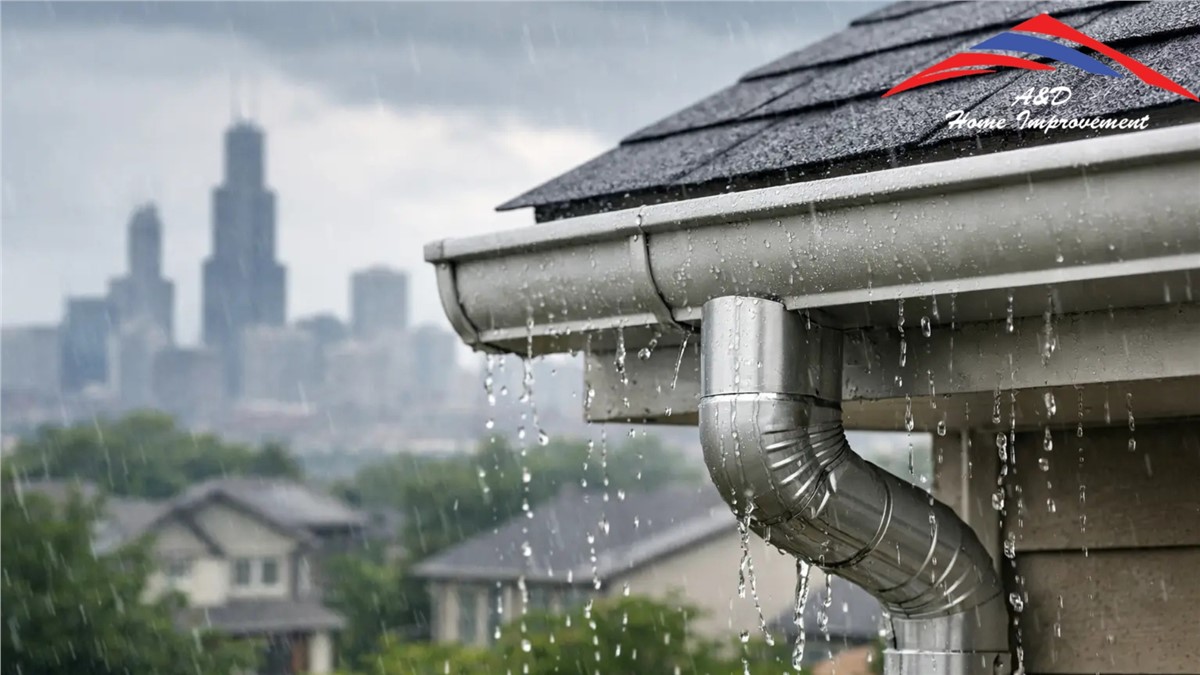
A large gutter can still overflow if the downspouts cannot keep pace. Downspouts are the exit route for roof runoff, and undersized or poorly positioned outlets create a bottleneck. This is especially common at valleys, where water reaches the gutter in a concentrated rush.
Larger 3-by-4-inch downspouts can move significantly more water than standard smaller profiles. They are often recommended with 6-inch gutters and on homes with heavy runoff. Additional downspouts may also be needed on long gutter runs. The goal is not to add them at random, but to place them where they efficiently relieve the system.
At ground level, downspout extensions should direct water several feet from the foundation. If the property has drainage challenges, buried drain lines or other site-specific solutions may be appropriate. Those decisions should account for grading, soil conditions, municipal requirements, and where the water will ultimately discharge.
Gutter Guards Help, but They Do Not Fix Poor Design
Gutter guards can reduce maintenance and help prevent leaf-related clogs, making them a smart upgrade for homes with mature trees. They are especially useful in suburban neighborhoods where maple, oak, cottonwood, and pine debris can fill open gutters quickly.
But guards are not a substitute for proper gutter sizing, slope, or downspout capacity. A guard installed over an undersized system will not solve overflow caused by heavy roof runoff. Some guard styles can also shed water during extreme storms if they are not matched to the roof pitch and installed correctly.
The best approach is to design the gutter system first, then choose a high-quality guard that fits the gutter profile, roof conditions, and maintenance expectations. A professionally installed guard system should allow water to enter efficiently while keeping larger debris out of the channel.
Chicago Weather Calls for a Stronger Installation Standard
Chicago-area gutters face a demanding cycle of spring rain, summer storms, fall leaves, freezing temperatures, snow, and ice. That makes installation quality a long-term performance issue, not a cosmetic detail.
Secure hangers help gutters resist pulling away under the weight of water, wet debris, and ice. Correct pitch keeps water moving toward the downspouts instead of standing in the trough. Properly sealed end caps and outlets help prevent slow leaks that can stain siding, rot fascia boards, and damage soffits over time.
Homeowners should also consider the relationship between the roof and gutter system. Aging shingles, damaged flashing, or ice dam issues can send water where it does not belong, regardless of how new the gutters are. Coordinating roofing, gutter, and drainage work often produces a cleaner installation and a more reliable result.
When It Is Time to Replace Gutters
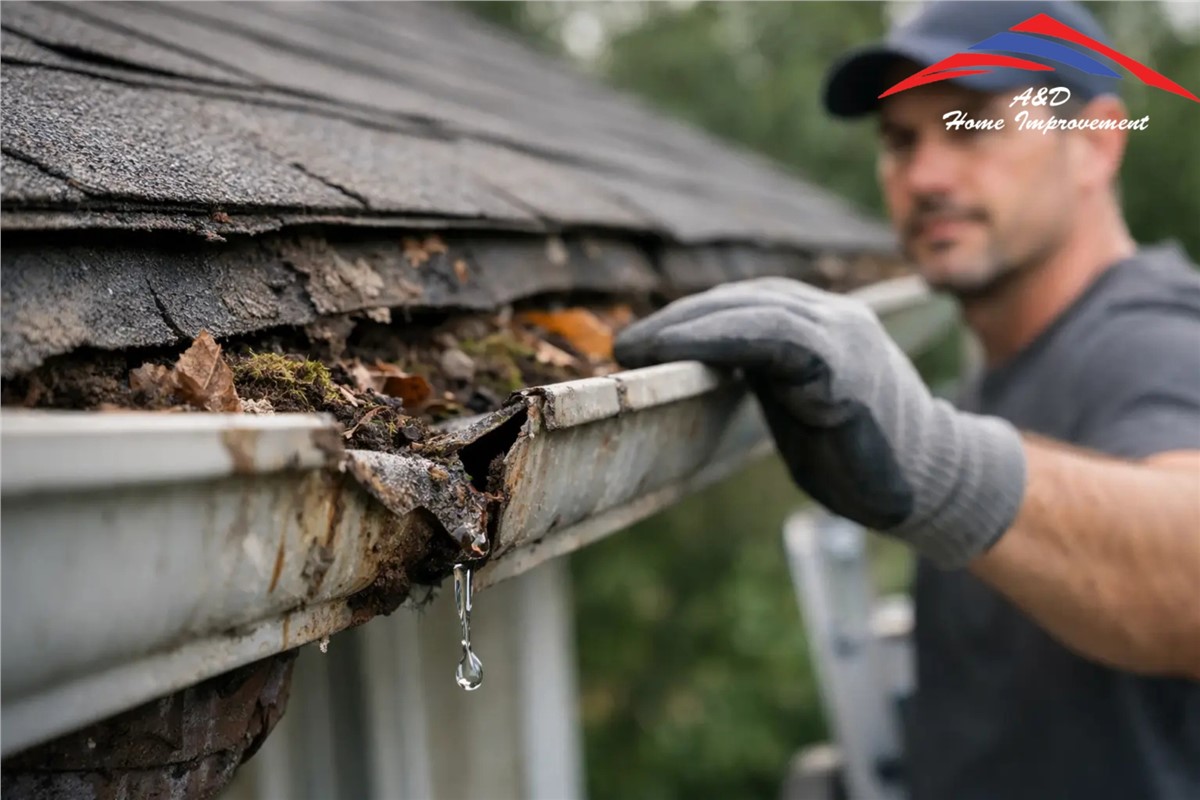
Frequent overflow, visible sagging, separated seams, peeling paint near the roofline, recurring clogs, and water pooling near the foundation are all signs that the current system deserves attention. Water marks on siding or basement moisture after storms can also point to drainage problems that are easy to overlook.
Replacement is often the right move when the gutters are undersized, heavily dented, repeatedly leaking, or no longer securely attached. If a roof replacement is planned, it is an ideal time to evaluate the gutters and guards. Installing a system that is designed for the property’s current needs can prevent a second exterior project later.
A&D Home Improvement helps property owners evaluate roof runoff, gutter sizing, downspout placement, and long-term drainage needs with solutions built for Illinois weather. The right system should fit the home, the roof, and the way water moves across the property, not simply match a standard package.
Water will always find the easiest path. A professionally designed gutter system makes sure that path leads away from the building, protecting the exterior, foundation, and peace of mind every time the forecast turns wet.
Subscribe to A&D Home Improvement's Blog